
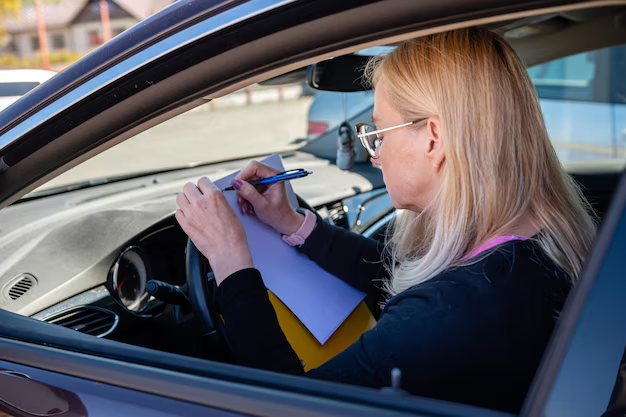
You need a driver's license to operate a motor vehicle on public roads
A driver's license is a legal document that proves you have passed a written test about traffic laws and a practical driving test. If you drive a car, truck, motorcycle, or most other motor vehicles on a public street, highway, or road, you must have one. The license shows that you understand the rules of the road and can operate the vehicle safely.
The requirement exists in every U.S. state and most countries worldwide. Driving without a valid license is illegal and can result in fines, vehicle impoundment, or criminal charges depending on your state and the circumstances.
Key Takeaways
- You must have a valid driver's license to operate any motor vehicle on public roads, including cars, trucks, and motorcycles.
- Private property, farm equipment, and certain recreational vehicles have different rules and may not require a license.
- Learner's permits and restricted licenses allow supervised or limited driving before you get a full license.
- Driving without a license carries penalties including fines, vehicle impoundment, and possible jail time depending on your state.
- Some states allow you to drive with an out-of-state license for a limited time if you are a new resident.
What counts as needing a license
You need a license whenever you operate a vehicle on a road that the public can use. This includes city streets, highways, county roads, and private roads that are open to the public (like a shopping center parking lot). The vehicle type matters less than where you are driving it.
A few situations fall outside this rule. Driving on private property that belongs to you or someone who has given you permission—like a farm, ranch, or private driveway—does not require a license. Some states allow unlicensed operation of farm equipment, all-terrain vehicles (ATVs), or golf carts on private land. A few states permit limited operation of certain vehicles on private property without a license, but the rules vary widely by state.
Learner's permits and restricted licenses
Before you get a full driver's license, most states issue a learner's permit (sometimes called a learner's license or instruction permit). This document allows you to practice driving under specific conditions, usually with a licensed adult in the vehicle. You must pass a written test about traffic laws to get one, but you do not take the driving test yet.
A learner's permit is still a legal document, and you must carry it when you drive. Violating the conditions of your permit—such as driving alone when an adult is required, or driving after a certain time—can result in fines and suspension of the permit.
Some states also issue restricted licenses after you pass your driving test but before you get an unrestricted license. These might limit the hours you can drive (no driving between midnight and 5 a.m., for example) or require you to use a hands-free device for phone calls. Restrictions typically last until you reach a certain age or have held the license for a set period.
What happens if you drive without a license
Driving without a valid license is a criminal offense in every state. The penalties depend on whether you never had a license, your license expired, or it was suspended or revoked. A first offense for driving with an expired license is usually less serious than driving with a suspended license or no license at all.
Common penalties include fines ranging from $100 to $1,000 or more, depending on your state and the specific violation. Your vehicle may be impounded, meaning police take it and you must pay a fee to get it back. You may face jail time, particularly if you have multiple violations or caused an accident. Your insurance rates will increase significantly if you are caught, and some insurers will drop you entirely.
If you are stopped and cannot show a valid license, the officer can issue a citation, and you may be arrested depending on the circumstances. Even if you were not at fault in an accident, driving without a license can make you liable for damages and prevent your insurance from covering the claim.
Moving to a new state with an out-of-state license
If you move to a new state and have a valid driver's license from another state, you can usually drive legally for a limited time while you get your new state's license. This grace period varies by state—some allow 30 days, others allow 60 or 90 days. A few states have no specific grace period and require you to get a new license when ready.
You will need to visit your new state's Department of Motor Vehicles (or equivalent agency) to exchange your out-of-state license for a new one. Most states do not require you to retake the driving test if your previous license was valid, though you will need to pass a written test about that state's specific traffic laws. Bring your out-of-state license, proof of residency (like a utility bill or lease), and proof of identity.
Special licenses for different vehicle types
A standard driver's license covers most passenger vehicles. However, operating certain vehicles requires an additional endorsement or a different class of license. A commercial driver's license (CDL) is required to drive large trucks, buses, or vehicles carrying hazardous materials. A motorcycle endorsement is required in most states to operate a motorcycle legally on public roads.
Some states issue separate licenses for mopeds or motorized bicycles, which have lower age and testing requirements than a full driver's license. Tractor-trailers, school buses, and vehicles designed to carry 16 or more passengers all require a CDL. If you operate any of these vehicles without the proper license class or endorsement, you face the same penalties as driving without a license.
Renewing and maintaining your license
A driver's license is valid for a set period—usually four to eight years depending on your state and age. When your license is about to expire, your state's DMV will send you a renewal notice. You must renew before the expiration date to continue driving legally.
Renewal can usually be done in person at the DMV, by mail, or online depending on your state and whether you need to renew your photo. Some states require you to retake the written test or vision test at renewal, while others do not. If your license is suspended or revoked, you cannot straightforward renew it—you must complete the steps required by your state to restore it, which may include paying fines, completing a driver safety course, or waiting out a suspension period.
Frequently Asked Questions
Can I drive with a learner's permit if I am alone?
No. A learner's permit requires a licensed adult to be in the vehicle with you in most states. The adult must usually be at least 21 years old and seated in the front passenger seat. Driving alone with a learner's permit is illegal and can result in fines and suspension of the permit.
What if my license expired while I was out of the country?
Most states allow a grace period for licenses that expired while you were outside the country, typically 30 to 60 days after you return. You should renew as soon as you return home. Bring proof of your travel if asked. Driving on an expired license, even with this grace period, is technically illegal, so renew when ready.
Do I need a license to drive a golf cart on a public road?
It depends on your state and the specific road. Most states do not allow golf carts on public highways or main roads. Some allow them on low-speed roads or residential streets, and a few require a special golf cart license or permit. Check your state's DMV website or call them to learn the rules in your area.
What is the difference between a suspended and revoked license?
A suspended license is temporary—you cannot drive during the suspension period, but your license will be restored automatically after the suspension ends. A revoked license is permanent, and you must reapply and pass all tests again to get a new license. Revocation is typically used for serious violations like multiple DUIs.
Can I drive someone else's car without my own license?
No. The license is tied to you, not to the vehicle. You must have your own valid driver's license to operate any vehicle on a public road, regardless of who owns it. Driving without a license is illegal even if the car's owner is present and gives you permission.