
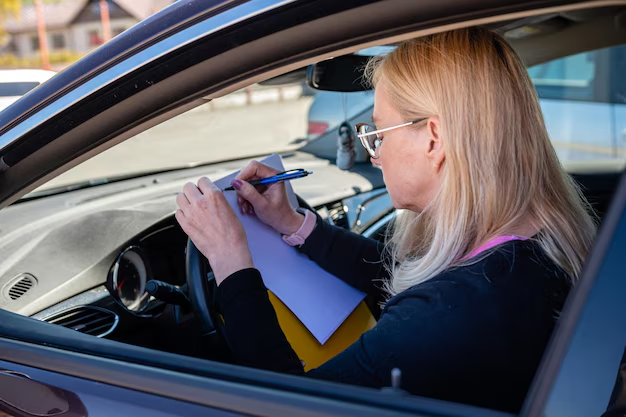
You need a driver's license only if you operate a motor vehicle on public roads
A driver's license is not required for existing or for most daily activities. You need one specifically to drive a car, truck, motorcycle, or other motor vehicle legally on public streets, highways, and roads. If you do not drive, you do not need a license.
The requirement comes from state law, not federal law, so the rules vary slightly by state. But the core rule is the same everywhere: driving without a license is illegal and can result in fines, vehicle impoundment, and criminal charges depending on your state and the circumstances.
Many people live their entire lives without a driver's license. Others get one and then stop driving. The license itself is not a requirement for citizenship, employment, or housing — though some employers and some housing situations may require one as a practical matter.
Key Takeaways
- You need a driver's license only to operate a motor vehicle on public roads; you do not need one to live, work, or travel by other means.
- Driving without a license is illegal in every state and can result in fines, vehicle impoundment, and criminal charges.
- A state ID card serves as proof of identity and age for most purposes and does not require you to drive.
- Some employers and landlords may request a driver's license as a practical requirement, but this is their choice, not a legal mandate.
- If you cannot or do not want to drive, a state ID card is a legal alternative for identification purposes.
What counts as driving and when you need a license
You need a license to operate any motor vehicle on a public road. This includes cars, trucks, motorcycles, mopeds, and in some states, larger scooters. The key word is public — roads that anyone can use, maintained by the city, county, or state.
You do not need a license to drive on private property with the owner's permission. A farmer can operate a tractor on their own land without a license. Someone can drive a golf cart on a private golf course. But the moment you move that vehicle onto a public street, a license becomes required.
Riding a bicycle, skateboard, or scooter (depending on your state's definition) does not require a driver's license. Walking, taking public transit, riding in someone else's car as a passenger, or using a rideshare service like Uber or Lyft does not require a license.
Situations where people often think they need a license but do not
Many employers ask for a driver's license during hiring, but they are asking for it as a form of identification and proof of age, not because driving is part of the job. You can provide a state ID card instead in most cases. Some employers in industries like delivery or transportation do require a valid license because the job involves driving — that is different, and the employer will tell you upfront.
Landlords and rental companies sometimes request a driver's license as proof of identity when you sign a lease or rent a car. Again, they want identification; a state ID card usually works. If you are renting a car and do not have a driver's license, you cannot rent it, because the rental company is legally responsible for who operates the vehicle.
Banks, airlines, and government offices may ask for a driver's license as one form of acceptable ID, but they typically accept other documents like a passport, state ID card, or military ID. Check with the specific organization about what forms of ID they accept.
Getting a state ID card if you do not drive
Every state offers a state ID card (sometimes called a non-driver ID) that serves as proof of identity and age without requiring you to pass a driving test or prove you can drive. It looks similar to a driver's license, has your photo and signature, and is accepted by banks, airlines, government offices, and most employers.
The process is similar to getting a driver's license: you visit your state's DMV or equivalent office, bring required documents (usually a birth certificate, proof of address, and Social Security number), pay a fee, and have your photo taken. You do not take a written test or a driving test. The card is valid for a set number of years, usually five to ten, depending on your state.
A state ID card costs less than a driver's license in most states and serves the same identification purposes. If you need proof of age to buy alcohol or enter a venue, a state ID card works. If you need ID to open a bank account or board a plane, a state ID card works.
What happens if you drive without a license
Driving without a valid license is illegal in every state. The penalties vary depending on whether you never had a license, your license expired, your license was suspended, or your license was revoked. A first offense for driving with an expired license is typically a minor infraction with a fine. Driving with a suspended or revoked license is usually a misdemeanor with higher fines and possible jail time.
Beyond legal penalties, driving without a license creates practical problems. If you are in an accident, your insurance will not cover the damage because you were not legally allowed to drive. Police can impound your vehicle. You can face additional charges and fines. If you are stopped repeatedly, you may face criminal charges.
If your license has expired or been suspended, the solution is to renew it or resolve the suspension through your state's DMV. If you have never had a license and need to drive, you will need to get one by passing the written and driving tests.
Traveling and identification without a driver's license
You can travel by air, train, or bus without a driver's license. The Transportation Security Administration (TSA) accepts a state ID card, passport, military ID, or several other forms of identification at airport security. You do not need a driver's license to board a plane.
If you are traveling internationally, you need a passport, not a driver's license. An international driver's permit exists and can be useful if you plan to rent a car abroad, but it is not required for travel itself and is not a substitute for a passport.
For domestic travel and everyday identification purposes, a state ID card is sufficient and legal. Many people who do not drive carry a state ID card for exactly this reason.
Employment and housing without a driver's license
You can work in most jobs without a driver's license. Employers in retail, food service, healthcare, technology, education, and many other fields do not require driving. Some positions — delivery driver, taxi driver, truck driver, sales representative with territory travel — do require a valid license because the job involves operating a vehicle.
When an employer asks for a driver's license during hiring, ask whether it is required for the job or whether they accept other forms of ID. If the job does not involve driving, a state ID card usually satisfies their need for identification and age verification.
You can rent an apartment or house without a driver's license. Landlords ask for ID to verify your identity and check your background; a state ID card, passport, or military ID serves this purpose. You cannot rent a car without a driver's license because the rental company is legally liable for who operates the vehicle.
Frequently Asked Questions
Can I get a state ID card instead of a driver's license?
Yes. Every state offers a state ID card that proves your identity and age without requiring you to drive. It costs less than a driver's license, requires no driving test, and is accepted by banks, airlines, employers, and government offices for identification purposes.
What if I lost my license or it expired — do I have to renew it?
Only if you plan to drive. If you do not drive and do not plan to, you do not have to renew it. If you need identification for other purposes, a state ID card is a better option. If you do drive or might drive in the future, renewing is required to drive legally.
Can my employer force me to get a driver's license?
No. An employer can require that you have a valid license if the job involves driving, but they cannot require you to get one for a job that does not involve operating a vehicle. If they ask for ID, you can offer a state ID card instead.
Do I need a driver's license to ride a bike or scooter?
No. Bicycles do not require a license in any state. Some states require registration or a license for electric scooters or mopeds depending on their speed and engine size — check your state's rules. But a standard bicycle never requires a driver's license.
What if I have never had a driver's license and do not want one?
That is completely legal. Get a state ID card for identification purposes, and you can live your life without a driver's license. You can work, travel, rent housing, and handle all normal activities with a state ID card.