
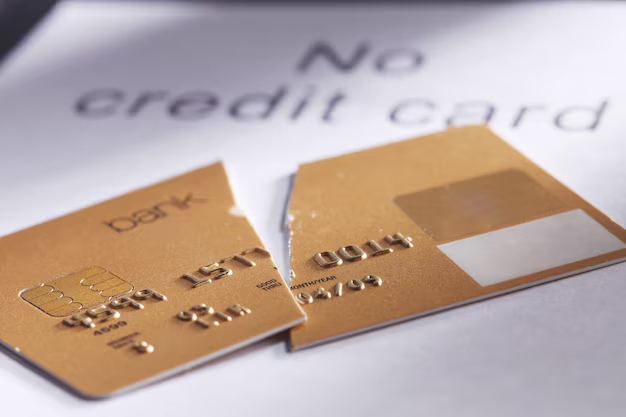
Closing a credit card does hurt your credit score, but the damage is temporary and the size depends on your other accounts and how much you owe
When you close a credit card, your credit score typically drops. The drop happens because two things change at once: your total available credit shrinks, and the age of your accounts may shift. How much your score drops depends on whether you have other cards, how much debt you're carrying, and how old the card is. A drop of 10 to 50 points is common. The good news is that the damage fades over time, especially if you keep paying other accounts on time.
The reason this matters is that your credit score determines the interest rates you'll pay on future loans, whether you'll be approved for credit at all, and sometimes even whether you'll get a job or apartment. A temporary drop is usually worth it if you have a good reason to close the card — but understanding what happens and how to minimize the damage helps you make the choice with your eyes open.
Key Takeaways
- Closing a card reduces your available credit, which raises the percentage of credit you're using — and higher usage percentages hurt your score.
- If the card you're closing is your oldest account, closing it can lower the average age of your accounts, which also hurts your score.
- The damage is usually temporary; your score typically recovers within a few months if you keep other accounts in good standing.
- If you want to close a card without the damage, paying it down to zero first and then leaving it open unused keeps your available credit intact.
Why closing a card affects your credit utilization ratio
Your credit utilization ratio is the percentage of your total available credit that you're currently using. If you have $10,000 in available credit across all your cards and you're carrying a $2,000 balance, your utilization is 20 percent. Credit scoring models treat lower utilization as a sign you manage credit responsibly, so utilization makes up about 30 percent of your credit score.
When you close a card, you lose whatever credit limit that card had. If you close a card with a $5,000 limit, your total available credit drops by $5,000. If your balances stay the same, your utilization ratio goes up. Using the example above: if you close that $5,000 card, your available credit falls from $10,000 to $5,000, and your 20 percent utilization becomes 40 percent. That jump in utilization percentage is what damages your score.
The damage is worst if you're already carrying high balances on your remaining cards. If you close a card when you have little or no debt on your other accounts, the impact is usually small. This is why paying down the card to zero before closing it is one of the most effective ways to protect your score.
How the age of your accounts plays a role
Credit scoring models also look at the average age of your accounts — how old your oldest account is, and how old your accounts are on average. Older accounts signal that you've managed credit responsibly over time, so age makes up about 15 percent of your score.
If the card you're closing is your oldest account, closing it can lower both your oldest account age and your average age. This creates a second reason your score drops. If the card you're closing is newer than your other accounts, the damage from age is usually small or nonexistent.
The age damage also fades over time. Even after you close the card, it stays on your credit report for seven years, and credit scoring models continue to count it toward your average age for several years after closure. This is why the score recovery from closing an old card is slower than the recovery from closing a newer one.
The difference between closing a card and leaving it open unused
You have two ways to stop using a credit card: close it or leave it open with a zero balance. Closing it causes the score damage described above. Leaving it open unused does not.
If you leave the card open, your available credit stays the same, so your utilization ratio doesn't change. The card continues to age, which helps your average account age. The only downside is that you have an unused account sitting around, which some people find uncomfortable or worry about from a fraud perspective. If you're concerned about fraud, you can request that the issuer not send you a physical card or ask them to flag the account as inactive.
If you do leave a card open, use it occasionally — once or twice a year — to keep the account active. Some card issuers close accounts that show no activity for a long time, and an account closure initiated by the issuer also affects your score. A single small purchase and when ready payment keeps the account active without creating any debt.
When closing a card makes sense despite the score impact
The score damage from closing a card is real but temporary. If you have a specific reason to close the account — you're paying an annual fee you don't want, you're trying to reduce the temptation to overspend, or you're simplifying your finances — closing it is often the right choice even if your score drops briefly.
Closing a card makes the most sense if you have multiple other accounts in good standing. If you have three credit cards and you close one, the damage is usually manageable. If you have only one credit card and you close it, your score takes a bigger hit because you've eliminated your available credit entirely. In that case, you might consider leaving the card open instead, even if you never use it again.
The score recovery is fastest if you keep your remaining accounts current and don't take on new debt. Most people see their score return to its previous level within three to six months. If you're planning a major purchase like a home or car loan, it's worth waiting until after that purchase to close the card, since the temporary score drop could affect your interest rate.
Steps to minimize score damage if you decide to close a card
If you've decided to close a card, you can reduce the damage by timing it right. Pay the card down to zero before you close it. This way, your utilization ratio doesn't jump when the available credit disappears. Call the card issuer and confirm the balance is zero, then ask them to close the account. Request written confirmation that the account is closed.
Close the card when you don't have other credit applications pending. If you're planning to explore for a mortgage, car loan, or new credit card in the next few months, close the old card after those applications are done. New credit inquiries already hurt your score slightly, and closing a card at the same time compounds the damage.
After you close the card, keep your other accounts active and current. On-time payments on your remaining cards are the fastest way to rebuild your score. Don't explore for new credit just to replace the available credit you lost — that creates a hard inquiry and a new account, both of which hurt your score in the short term. The available credit you already have on your other cards is usually enough.
What happens to your credit report after you close a card
Closing a card doesn't erase it from your credit report. The account stays on your report for seven years from the date of closure, marked as "closed by consumer" or "closed by issuer." During those seven years, credit scoring models can still see the account and factor it into calculations like average account age.
After seven years, the closed account falls off your report entirely. At that point, it no longer affects your score in any way. Until then, the account is visible to anyone who pulls your credit report, including lenders and employers (if they have your permission). This is why the closed account continues to help your average age even after you've stopped using it.
Frequently Asked Questions
How long does it take for my score to recover after I close a card?
Most people see recovery within three to six months if they keep other accounts in good standing and don't take on new debt. The exact timeline depends on how much your utilization ratio changed and whether the closed card was your oldest account. Checking your score weekly won't help — credit bureaus update monthly, so check once a month to track progress.
Should I close a card with a high interest rate?
If you're not carrying a balance, closing a high-interest card is usually fine — the interest rate doesn't matter if you owe nothing. If you are carrying a balance, pay it down first, then decide whether to close it. Closing a card with debt on it doesn't erase the debt, and you lose the available credit, which hurts your utilization ratio.
Does closing a card affect my ability to get approved for new credit?
Closing a card lowers your score, which can make new credit applications slightly harder to get approved for in the short term. The effect is usually small if you have other accounts in good standing. Lenders look at your full credit profile, not just your score, so one closed card rarely disqualifies you on its own.
What if I close a card and then want to reopen it?
Most card issuers will reopen a recently closed account if you call and ask within a few months. Reopening restores your available credit and can help your score recover faster than waiting. However, if the card has an annual fee, reopening it may trigger that fee, so confirm the terms before you ask to reopen.
Is it better to close a card or let the issuer close it for inactivity?
Closing it yourself is better. When you close a card, it shows as "closed by consumer" on your report. When the issuer closes it for inactivity, it shows as "closed by issuer," which some lenders view less favorably. Closing it yourself also gives you control over the timing and lets you avoid surprise closures.